


.svg)
If you have ever stood outside your child’s bedroom door and heard the unmistakable sound of teeth grinding in the middle of the night, you are not alone. It is a sound that makes most parents cringe, and the immediate worry is usually about the teeth: Are they wearing down their enamel? Do they need a mouthguard? Are they stressed?
But as pediatric dentists, when we see a child who grinds their teeth (a condition called bruxism), our first thought is rarely about stress. Our first thought is about their airway.
Tooth grinding is not just a bad habit. For many children, it is a subconscious survival mechanism. It is an alarm bell signaling that your child is struggling to breathe while they sleep.
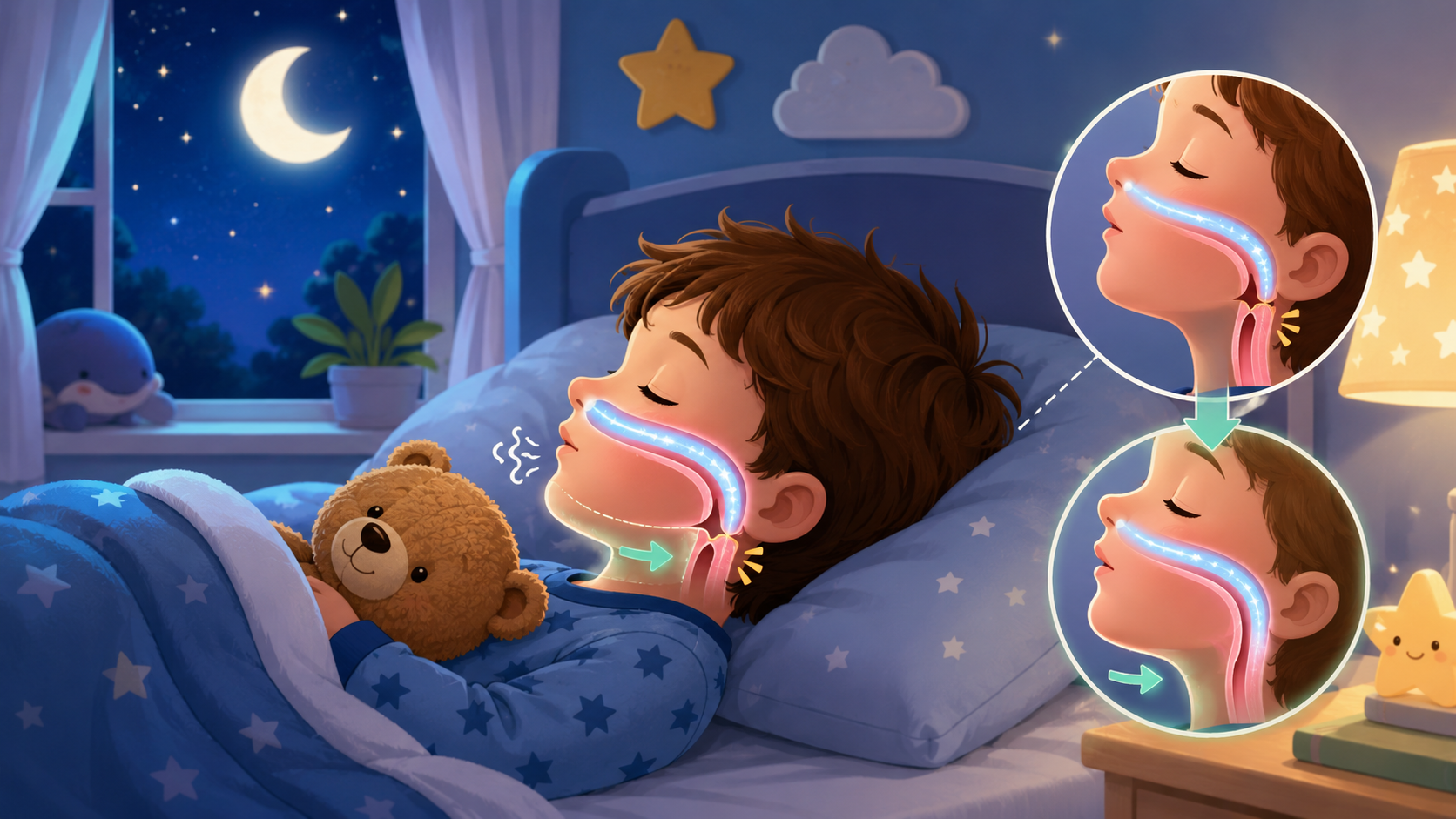
When a child goes to sleep, the muscles in their body relax. If a child has a compromised or narrowed airway, this relaxation can cause the airway to collapse or become obstructed. When the brain senses that oxygen levels are dropping, it panics. It needs to reopen the airway quickly.
To do this, the brain sends a signal to the jaw muscles to push the lower jaw forward. This movement opens up the space in the back of the throat, allowing the child to take a breath. The friction of the upper and lower teeth sliding against each other during this jaw movement is what produces the grinding sound.
In other words: your child isn't grinding their teeth because they are anxious. They are grinding their teeth to keep themselves breathing.
When this cycle of airway obstruction and jaw movement happens repeatedly throughout the night, it is a strong indicator of Sleep-Disordered Breathing (SDB) or Pediatric Obstructive Sleep Apnea (OSA).
If tooth grinding is the symptom, what is the actual cause? Airway obstruction in children is almost always multi-factorial. It is rarely just one issue, but rather a cascade of interconnected problems.
If your child grinds their teeth, here is a breakdown of what is likely causing the underlying breathing issue:
CauseLikelihood It Is a Contributing FactorWhat It MeansEnlarged Tonsils & Adenoids75–90%The most common physical roadblock. Disproportionately large tonsils and adenoids physically block the nasal passage and throat.Mouth Breathing Habit%A symptom of obstruction. When the nose is blocked, the child breathes through the mouth, altering facial muscle development.Allergies (Nasal/Environmental)60–70%Chronic inflammation from dust, pollen, or pets causes the adenoids and nasal tissues to swell, creating the initial blockage.Narrow Palate / High Arch50–60%When a child mouth-breathes, the tongue rests low instead of on the roof of the mouth. Without the tongue shaping it, the palate grows narrow and high, restricting the nasal cavity above it.Lip or Tongue Tie25–40%Tethered oral tissues physically prevent the tongue from resting in its proper position on the palate, forcing mouth breathing.
Note: These percentages overlap because most children experience several of these factors simultaneously. For example, allergies cause adenoids to swell, which forces mouth breathing, which leads to a narrow palate.
When a child cannot breathe properly at night, the consequences extend far beyond worn-down teeth. Sleep-disordered breathing means the child is spending their night in a state of low-level "fight or flight." They are not getting the deep, restorative sleep necessary for brain development and physical growth.
Children with untreated airway issues often exhibit:
If you suspect your child is grinding their teeth due to an airway issue, you need a team approach. Because the problem is multi-factorial, the solution usually is, too.
Here is the most common sequence of steps and specialists to seek out:
Start by looking for the root cause of inflammation. Testing for food sensitivities or environmental allergies (dust, mold, pet dander) can help reduce the swelling in the nasal passages and adenoids.
An ENT will evaluate the size of the tonsils and adenoids. If these tissues are severely enlarged and blocking the airway, an adenotonsillectomy (surgical removal) is often the most direct and effective way to clear the physical obstruction.
Your pediatric dentist will look for wear patterns on the teeth, but they will also evaluate the child's oral posture. They will check for lip and tongue ties that might be preventing the tongue from resting properly against the palate.
If years of mouth breathing have caused a narrow, high-arched palate, an orthodontist can use an expander. Rapid Maxillary Expansion (RME) gently widens the roof of the mouth, which simultaneously widens the floor of the nasal cavity, dramatically improving nasal airflow.
Even after tonsils are removed or the palate is expanded, a child who has mouth-breathed for years will likely continue to do so out of habit. A myofunctional therapist uses exercises to retrain the tongue, lips, and facial muscles to restore natural nasal breathing.
As pediatric dentists, we are often the first line of detection for airway issues because we see the physical evidence right there in the mouth. The worn enamel, the narrow arch, the scalloped tongue—these are all clues.
If you hear your child grinding their teeth, do not wait for them to "outgrow it." Mention it at their next dental visit. We can help evaluate their airway, discuss their sleep habits, and guide you toward the right specialists to ensure your child gets the deep, healthy sleep they need to thrive.
At Children’s Dentistry of Redding, we help families build strong, healthy habits that last a lifetime.
📍 Located in Redding, CA
📞 Call today to schedule your child’s appointment